The economics are brutally simple. An open section of roof in an Ohio rain admits water by the gallon — into insulation that clumps and dies, drywall that swells and crumbles, flooring that cups, and the wiring inside the walls. Water damage compounds hourly; the longer the opening runs, the more the repair list grows interior line items that dwarf the roof work itself. The tarp is the tourniquet: applied early, it keeps the emergency a roofing job.
What a proper tarp job is (and isn’t)
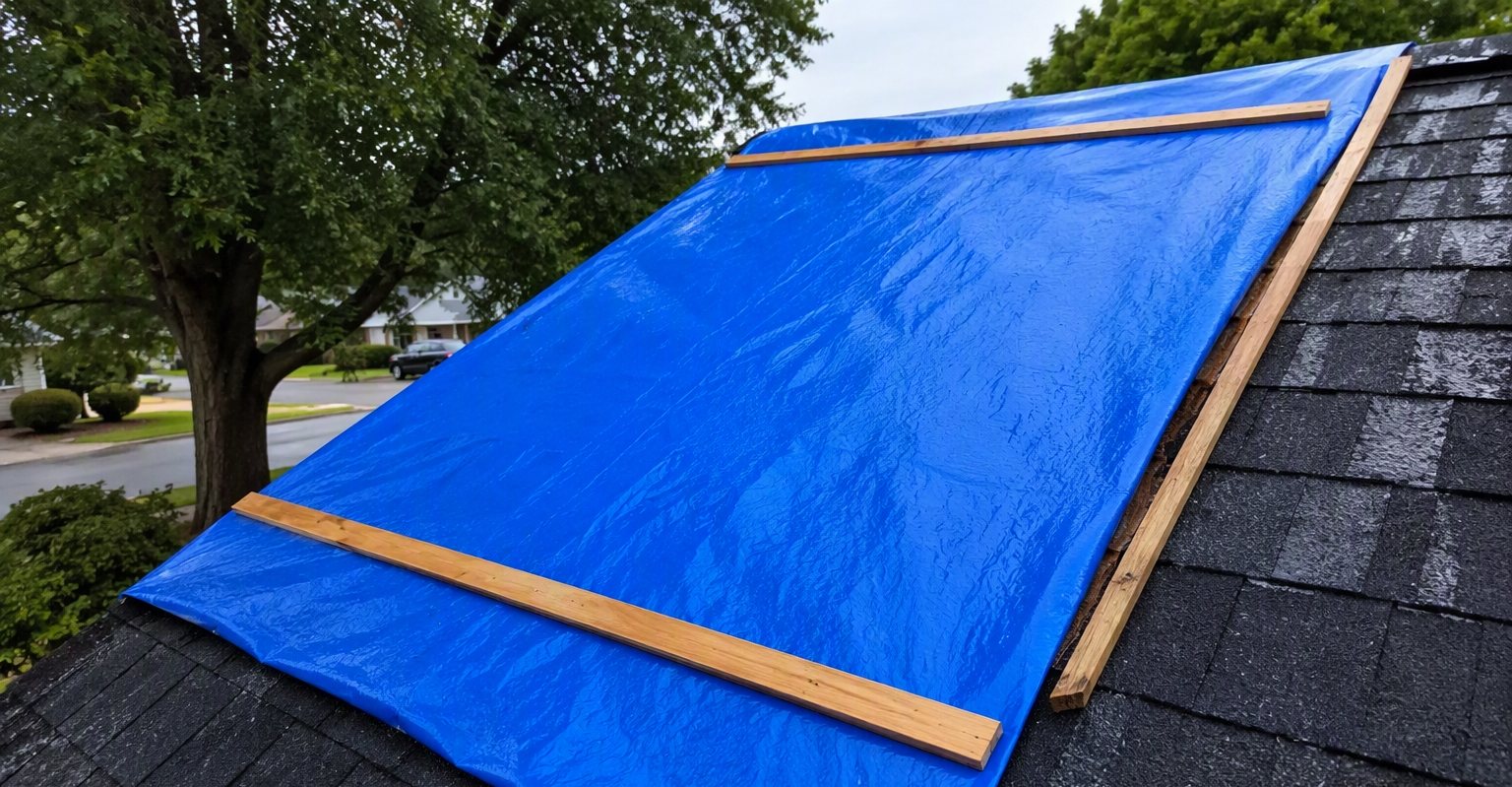
- Over the ridge, not to the ridge: the tarp crosses the peak so water can’t run under its top edge. Tarps that stop at the damage line feed water beneath themselves.
- Battened, not sprinkled with nails: wood strips screwed through the tarp into sound decking hold it in a gale. Nails scattered through the field shred the tarp in the first gust and add leak points of their own.
- Sized past the damage: the cover extends well beyond the opening on every side, anchored to decking that’s verified sound — not to the mush the storm just made.
- Weeks, not seasons: a battened tarp buys comfortable time for the claim and the repair schedule. It is not a roof, and treating it as one ends with a second emergency.
The policy angle nobody mentions
Homeowner policies carry a duty to mitigate: after a loss, you’re expected to take reasonable steps to prevent further damage. Emergency tarping is the textbook step — and the itemized invoice and before-photos go into the claim file as part of the loss. Waiting for the adjuster while rain falls through the ceiling is the one move that can genuinely complicate an otherwise clean claim.
The sequence that works
Call, and the dispatch treats an active opening as the emergency it is — the crew stages as soon as weather allows safe roof work. Damage gets photographed before the tarp covers it (the claim needs the record), the cover goes on battened and ridged, and the permanent repair gets scoped and quoted while the house is dry. Tarp first, paperwork alongside, repair on schedule: that order keeps one bad night from becoming a bad season.
Roof open to the sky? Call (330) 539-3313 — any hour. The tarp goes on first; the questions come after.