
First, the honest framing: coverage decisions belong to your insurer, under your policy, and nobody on a ladder can promise an outcome. What a roofing contractor controls is the evidence the decision gets made on — and evidence is what moves claims. Here’s how the machine actually turns.
1. Date of loss anchors everything
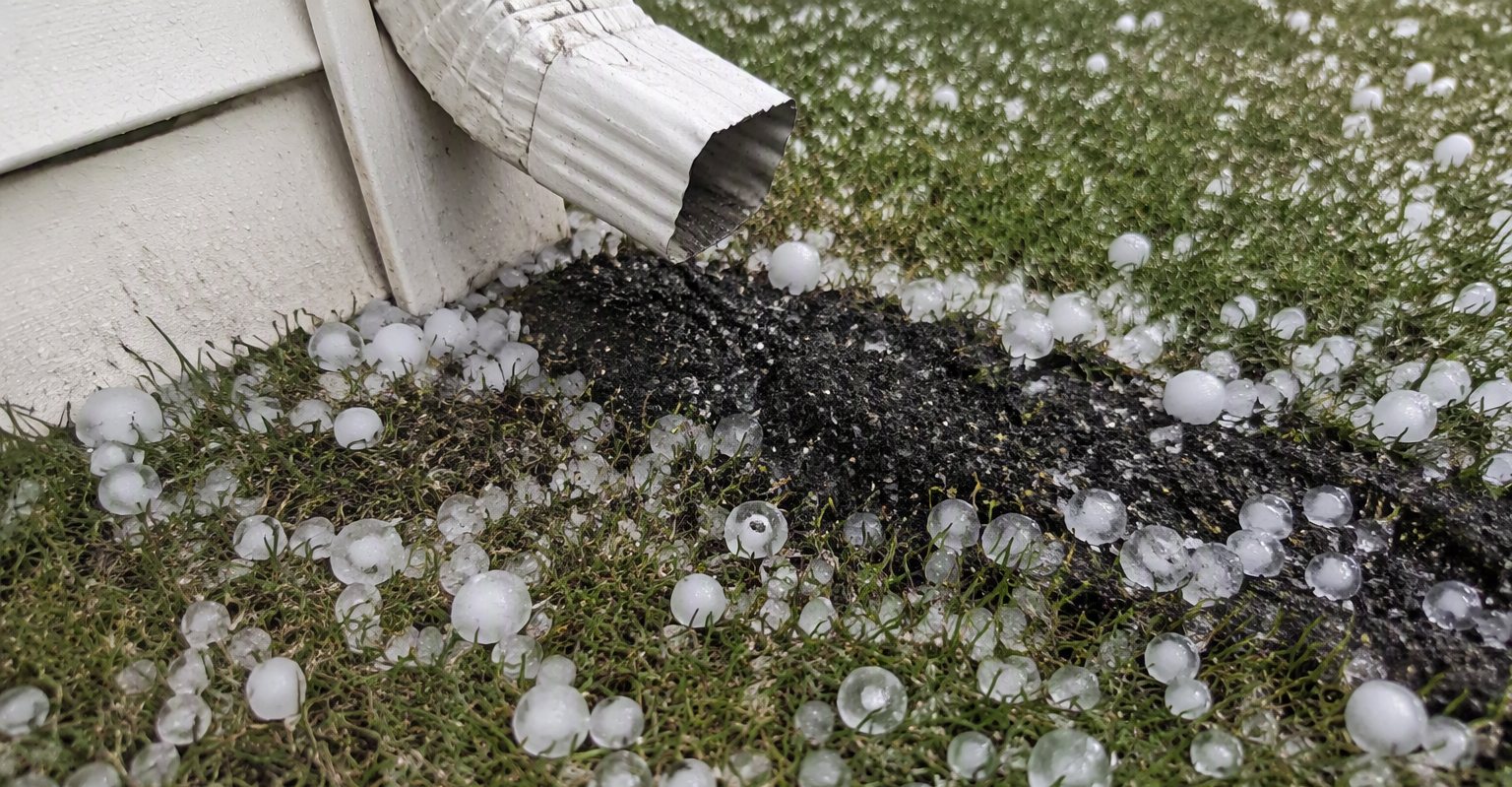
The claim begins with a specific weather event on a specific date — not “the roof has been leaking.” Weather records pin hail size and wind speed to your address on that date, and every piece of documentation hangs off it. This is why photographing damage when you find it matters: timestamps are testimony.
2. The inspection comes before the filing
Calling the carrier first is the most common misstep. If the damage is below your deductible, the inspection tells you that — before a claim number exists on your record. If the damage is real, you file with a slope-by-slope photo set and a written scope already in hand, which shapes every conversation that follows.
3. The adjuster meeting is the main event
The adjuster works a storm schedule — dozens of roofs a week, generalist’s eye, limited time per slope. When your roofer walks the roof at the same appointment, the bruised back slope and the creased rake tabs get pointed out instead of passed over. Nothing adversarial — just the damage, seen completely. Roofs inspected by the owner alone routinely come back scoped lighter than roofs walked with the contractor present.
4. The scope and the first number
The carrier issues a scope of loss — line items and pricing for what they’ll cover. Compare it against the contractor’s scope line by line: missing slopes, missing items (flashing, underlayment, code-required components), or quantities that don’t match the damage map. That comparison is where most claims are won or trimmed.
5. The supplement is routine, not a fight
Missed damage gets documented and submitted as a supplement — photos, measurements, the same disciplined format. Supplements are a normal part of storm work, and carriers process them daily. The claim closes when the scope matches the damage, and then the repair schedule takes over.
Storm damage and a claim decision to make? Call (330) 539-3313 — the Kings build the documentation side: inspection, photos, scope, adjuster walkthrough.